
|
|
-cover.jpg)
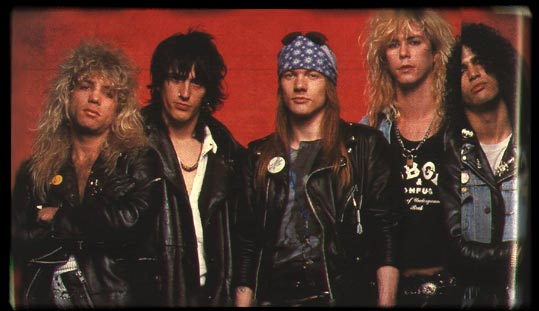
Slash revisits Appetite, hair-metal guitar of the '80s, and those wild Hollywood nights... at least the ones he remembers.
The Guns N' Roses legend is filled with as many cautionary
tales as rock 'n' roll victories. There's the time Duff McKagan's pancreas
exploded from prolonged
overindulgence. And the time Izzy Stradlin' was
arrested for relieving himself in an airplane gallery. And the time Axl
Rose incited a stadium riot because of
audience member took his photo. But for a guitarist,
there's perhaps no story more gruesome and edifying than the one recently
revealed by the band's
longstanding producer, Mike Clink.
"When I first met the band, Slash was playing a Jackson
guitar," he recalls. "It was December, and it was close in the rehearsal
room at Hollywood's S.I.R.
Studios. And Slash hadn't changed his strings in I don't
know how long. So I said, 'You know, your strings are dead.' And he said,
'Okay, I'll change them.' So
he goes off into a corner, and he cuts off all the strings
at once--and the neck is just tweaked. And from that moment on, that guitar
never went into tune ever
again. It was pretty horrendous."
It's difficult to believe that Slash was them a mere two
months away from recording one of the landmark rock albums of the past
15 years. But even incipient
guitar heroes have to learn the ropes of guitar maintenance
somehow--and Guns N' Roses always to take their lessons from cold, hard
experience rather than by
example.
Fifteen years later, you can still hear that preference
for often-brutal reality ripping from the speakers whenever you spin Appetite
for Destruction. (And if you
haven't treated yourself lately, hell what are you waiting
for?) It's not the sound of a guitarist who would patiently replace one
string at a time--it's the sound of
two guitars, actually, who would rather do what it takes
to get back to playing that much sooner.
Coincidentally, Slash and the band's underrated and unfortunately
press-shy rhythm guitarist, Izzy Stradlin', were jamming together for the
first time in years when
we contacted Slash to reminisce about the making of Appetite
some 15 years after the fact. Typically, Slash wasn't dwelling on past
successes, but his reunion
with Izzy had rekindled an appreciation for--and analysis
of--the rare and exquisite chemistry that was captured on far too few albums.
In the exclusive interview, Slash jogs his memory about recording the first and best Guns album, and details where it all went right--and then very wrong.
Guitar One: Congratulations on Appetite for Destruction's
anniversary. Were you aware it had been 15 years?
Slash: It was brought to my attention yesterday.
I hadn't been counting.
Guitar One: Is it safe to say that Appetite is your
favorite Guns album?
Slash: I love playing, recording, and touring so
much that each record has its own "whatever" about it. I had a blast making
that record, but I just didn't realize
how cool it was until way after the fact. When you make
a record, it's really of-the-moment. After it's done, I never even listen
to it again. I just enjoy the time that
I'm in the studio. So really, the only reminder I have
about any of the recordings is usually through somebody else.
Guitar One: Bit it was your debut album. Didn't
that make it special?
Slash: It was the first extended studio effort
that we'd done collectively, so that in itself was a gas. At the same time,
there was so much else going on00I was
staying out till four in the morning, getting to the studio
by at least noon. And I wasn't living anywhere so I was a complete vagabond
during the making of
Appetite. There was a lot of craziness and partying going
on--all of the stuff that comes with rock 'n' roll band that has no idea
where it's going. We did everything
we wanted to do and got away with whatever it was we could
get away with. So looking back on it now, it's like, yeah, that was totally
cool; I wouldn't have
missed a minute of it.
Guitar One: Were there any templates you were holding
up back then, saying, "If I could make an album like this, I'd by happy"?
Slash: No. Everyone else might have a different
story, but I'm only speaking on my behalf. From the time the band started,
it's always had a chemistry where
everybody played what they thought needed to be incorporated
into the music. The band had a very magical chemistry. I was thinking about
this last night,
because I was jamming with Izzy. Everybody always came
up with their own ideas. Nobody really asked a lot of questions. We just
had an unspoken
chemistry--a natural feel for knowing where to put a part.
There wasn't a lot of sitting around and looking to the future as far as
how big a hit this was going to be.
We just incorporated what we each liked as individuals
into the songs. And it just happened; there was no discussion.
Guitar One: Did the band feel unified at that point?
Slash: We were the only five guys who could have
made up that band in the whole of L.A. Especially at that point in time;
the '80s was probably one of the worst
decades of all time for music [laughs].
Guitar One: Which was similar to the current climate-disposable
pop and cookie-cutter metal bands.
Slash: Exactly. We hated everything that was going
on everywhere, so we ended up falling together. It was sort of fluke how
it happened, but it was inevitable
because individually, we couldn't pair up with anyone
else-we each had our own personal direction. We all eventually got together,
and that was the only
combination that worked. Against all odds, we went headlong
into this thing. But it wasn't preconceived--that's just who we were. When
we just wanted to make
our album and to be good at what we did.
Guitar One: But were you reacting against how plastic
music had become?
Slash: No, it wasn't that. It was just that, given
the time period, what we did was very much against the grain. And we enjoyed
the static [laughs].
Guitar One: Your playing was more raw, melodic,
and bluesy that the fleet-fingered style that dominated the L.A. hair-metal
scene back then. What were some
of the reactions to your style?
Slash: I wasn't riding anybody's opinion. t wasn't
until much later that I got recognized as a half-decent guitar player.
But in the Hollywood scene, we were such
a brash band that the whole thing was overwhelming.
I just liked to play what I like to play. As long as I though I was playing
well, I didn't really give a shit what
anyone was thinking. But I've always been very paranoid
about the quality of my playing. I'm one of those guys who always asks
afterwards, "Did I play okay?"
But I wasn't judging my playing by anyone else's standards
but my own. I didn't have any convoluted dreams about being a guitar hero.
Guitar One: But you became one anyway.
Slash: There was a point when I started getting
phone calls to do magazine interviews. And then at another level, me and
Axl got the lead singer / lead guitarist
combo thing going that was very recognizable. From that
point on, I started to get recognized as a guitar player, which was very
flattering. I appreciate the fact
that I've done pretty well for myself in the context of
being one fifth of a cool rock 'n' roll band.
Guitar One: How difficult was it to get the band's
sound on tape?
Slash: Capturing it properly was a hard thing to
do because it was very raw, and we didn't want to use a lot of effects
and other stuff to embellish it too much. At
the same time, we did have a certain amount of professional
integrity, and we wanted it to sound tight. There are a lot of bands that
try to sound unhinged. We
were unhinged, but we also liked to tie it together enough
to keep it from exploding all over the place. So it always had that sound
where it was just about to fall
part, but it was a little tight at the same time.
Guitar One: What was your daily routine like at
that time?
Slash: My existence had always been that detached
gypsy kind of thing--very focused around my music, but as far as everything
else very detached. So I'd work
until 11 or 12 at night, and then hit the street, find
a place to hang out, then find a place to sleep, and then find a way to
get back to the studio the next morning.
That was the making of the whole record.
Guitar One: Would you indulge at all when you were
recording?
Slash: One of the most important things to know
about how Guns worked, is even on our worst days, everything else would
take a backseat to the band in order
to do that properly. There was a little of everything
within reason [laughs], it wasn't as excessive during the actual recoding
process because as soon as you
couldn't play well, then the whole point of being around
ceased to exist. So in the studio, maybe a little Jack and coffee [laughs].
But after a day's work, it was
go-for-broke. And then the next day, you just showed up
at the studio on time, and no one had anything to say, as long as it didn't
affect your performance.
Guitar One: So where did it start to go wrong?
Slash: First there was Steven [Adler, the band's
first drummer, who was let go for the excessive drug abuse]. That was a
big change, but we survived it. But that
still had a big effect on the camaraderie of a bunch of
guys who--I had to sound cliché--really came from the gutter. But
it was hard, because I was only 20 and
Steven was only 21 when the band really started. We had
professional ethics, but at the same time, we were a crazy bunch of kinds.
Trying to keep a tab on any
one of us was difficult [laughs]. We just knew when we
had to show up for work, but after work.... God knows what was going on.
So when we buckled down to do Use Your Illusion, [former
Cult drummer] Matt Sorum came in, and he was just like the rest of us,
so that was cool. And then
we're doing this whole double-record thing because we
had so much material. And then we had all these huge shows coming up, so
it's like we were touring
during the making of the record. There was a lot going
on. So we were out for two-plus years on those albums.
Then Izzy left, and a lot of that had to do with the excessive
shit happening on the road, as far as going on late and riots and that
kind of stuff. We were a really
simple band from the start. We really looked forward to
getting up and playing every night--that's what we're all about. But when
that started to get complicated
for reason that didn't have anything to do with the rest
of us, it put a strain on the band.
It wasn't a "success kills" kind of story, it was just
that what Axl had originally planned all along started to become something
that none of us knew anything about
[laughs]. So when the tour was over, I looked at what
was going on, and I realized I felt very estranged. What bounded us together
was really lacking as soon as
we were missing a couple of guys. You just can't reinvent
something like that.
We tried to hang in there was long as possible, but Axl
was going in a musical direction that none of us could fathom. Eventually,
it just wasn't fun for me, and I
finally left. And consequently Duff left, and Matt got
fired. Now Axl is doing Guns on his own. I have no regrets about the whole
thing, because it was a slow,
systematic thing that went on. I'm just waiting for the
new Guns albums to come out so I can have something solid in my hands to
explain where Axl was
headed--just to clarify some things [laughs].
Guitar One: But musically, at least something good
came out of Axl's temperamental side.
Slash: Oh yeah. He's one of the most brilliant
lyricists. He's got so much going on, and he's really an intelligent, amazing
guy. It's just... it depends how much of
that [emotional baggage] you want to experience with him.
A lot of it is stuff that not everyone in the band necessarily understood.
So you try to understand, and
you try to be a good friend and bandmate as you go through
it. But when it negatively affects everything the band is doing, it's really
hard to stand by hi,
I'm also interested to hear the new Guns record because
so much has gone on since this whole thing started--I know he's got a lot
to say. Even a lot of his stage
performance is fueled by angst. And it's essential to
have that sort of soul and energy for the music to come across as genuine;
that's an integral part of rock 'n'
roll. But it just depends on how far you want to take
it. It's like, if you can get it all out of your system in the tow hours
you're onstage, great--as long as you're
onstage [laughs].
Guitar One: You've been jamming with Izzy again.
Any new perspective on why your playing styles work so well together?
Slash: It's the kind of thing where no matter who
comes up with initial idea, I never really have to go, "Izzy, play this
part this way." He just plays his thing his own
way, and we never really talk about it much.
Last night, we went in and took two songs from scratch--just
basic chord changes--and worked them into full songs. That's one of the
things about me and Izzy
working together--he knows where I'm at, and I know where
he's at. And that's the way it's always been. I make up something that
accompanies his part, and at
the same time accents it, and he does the same with my
parts. We have that kind of chemistry. We've always been good friends,
so for us to get in a room and
play is a very easy thing to do.
Guitar One: What can we expect from you next?
Slash: I'm putting together another record with
some stuff I've done with Izzy and other stuff I've done on my own. I want
to start writing with other people as
well, and put together an album with a lot of guests--a
really cool rock 'n' roll record with people you wouldn't expect to hear
together.
Guitar One: And finally, what's the strongest impression
you have of your time creating Appetite For Destruction?
Slash: You should probably ask the rental car companies
who rented us the vans we used to drive from the Valley to Hollywood and
back [laughs]. There were
a few damaged vans--we must have dropped off about three
or four in the middle of night. So many rental places were pissed off and
ready to sue--except there
was no entity to sue, really. That's what the album was
about--an appetite for destruction. It was us against the world. And it
was a really cool time, because we
pulled it out.
Slash's and Izzy's Arsenal on Appetite
As Guns N' Roses entered Canoga Park's Rumbo Studios to
record basic tracks for Appetite, Slash was a little under equipped, to
say the least. He had a
Jackson guitar with a "tweaked neck" and a borrowed Marshall
cabinet. Izzy Stradlin' wasn't much better off, having only recently acquired
an open-back Carvin
4x12 for his MESA/Boogie head and self-painted Gibson
ES-175 hollowbody.
"For the longest time, equipment was the hardest thing to get and hold onto," explains Slash. "To say that anything was actually yours was a very rare occurrence."
Fortunately, producer Mike Clink and the band's management ensured that each member was outfitted with equipment appropriate to his individual playing style.
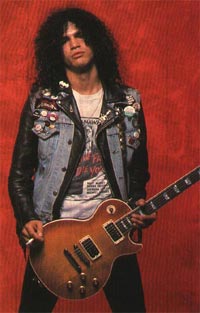
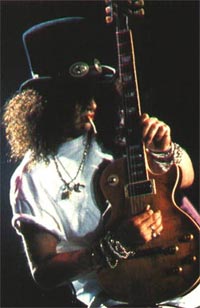
"Out then-manager gave me a handmade Les Paul [copy] with
Seymour Duncans," says Slash. "It was made by a guy in Redondo Beach who
made amazing
'59-style flametops. That was the guitar I used to make
the whole record, and I still use it today."
As for an amp, Slash and Clink went to every rental company
in Los Angeles and previewed available heads. They eventually settled on
a Marshall Jubilee from
S.I.R.
And effects? "Oh, in the early days, I had one of those
BOSS pedal boards," says Slash. "I tried to use that, but with amount of
moving around I did onstage, I'd
either kick it offstage or step on the wrong ting or unplug
it. After that, I just went straight into a Marshall."
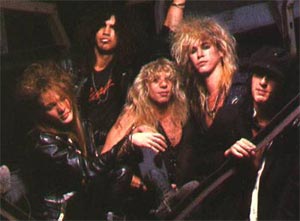
When William Bailey left Lafayette, Ind., for Los Angeles,
the authorities in town let go a big sigh of relief. Calling himself Axl
Rose (an anagram for oral sex), the
high school drop-out had a fertile imagination, considerable
talent, and a honker for trouble. His police record include charges for
public intoxication, contributing
to the delinquency of a minor, and criminal trespassing,
all of which made his departure for Los Angeles with pal Jeff Isabell (a.k.a.
Izzy Stradlin') a welcome one
for the normally peaceful midwest burg. Out west, the
two nosed around in bands, ultimately hooking up in a group crafted their
name from two bands they had
previously played in: L.A. Guns and Hollywood Rose. Guns
N' Roses was born. To fill out the crew, Rose recruited an eccentric but
mild-mannered guy named
Saul Hudson (a.k.a. Slash), a biracial, English-born guitarist
with lots of hair and taste for hard liquor; Steven Adler, a drummer who
had notorious drug problem;
and Duff McKagan, a bassist fresh in from Seattle, where
he beyond being one of the original grunge musicians, was rumored to have
stolen over 100 cars. The
year was 1985, and the City of Angels would soon have
to brace itself for the most intense musical explosion since punk rock
broke big in 1977.
"I remember seeing them at the Troubadour back in 1987
and Axl was in his kilt, which was a shock," says Katherine Turman, then
an editor at Teen magazine,
now a producer at the nationally syndicated radio show
"Rockline." "That night they did a few Stones and Aerosmith covers. At
that time there was a buzz about
them in Hollywood about them being troublemakers. There
was something about Axl being recently indicted on rape charges too, which
gave them a real bad-boy
image."
According to Turman, that bad-boy image lent the band,
and that burgeoning hair-metal scene, "a dark undercurrent of decadence,"
a reveling that proved, at
last in Guns N' Roses' case, that it wasn't simply
for show. Unlike many other cover bands on the scene, GN'R didn't buy into
cheap publicity or artifice. Rather,
everything they did, they did because they wanted to.
And the opposite was also true.
"We covered them a lot," says Gerri Miller, then an editor
at Metal Edge magazine. But after they broke big they literally stopped
doing photo shoots, which made
our job almost impossible. Their label ended up doing
composite live shots for their press photos. It was ridiculous."
They may have avoided photographers, but they didn't always
avoid sitting down for interviews, and least early on. Turman recalls interviewing
the band for the
first time. "Slash told me, 'If we're going be doing this
interview why don't you bring over a fifth of Jim Beam.'" She also remembers
taking Adler home after that
same interview. "We were driving along and 'Welcome to
the Jungle' came on the radio, Steven was air-drumming and freaking out
and getting really excited. It
was great to see."
Photographer Neil Zlozower picked up on the GN'R buzz early
on, and shot the band a few times before they exploded. "They came into
my studio in 1987 and,
like a lot of young bands who come in here, they're acting
like Mr. Cool, a little cocky. I told them what I wanted them to do, but
they didn't want to do it. They
weren't looking into the lens or cooperating at all, as
if to say, 'Don't tell us what to do. We're the band, we'll tell you what
we want to do.'" That didn't go over
well to a photographer who had come of age in the '70s
shooting bands like the Stones and Led Zeppelin. "Guns definitely had a
nastier-than-unusual quality
about them," he says. "It wasn't quite like the grunge
phenomenon, where everyone seemed so typical. It was clear that they were
a new era blowing in, wearing
crappy clothes and smoking cigarettes and not caring a
whole lot."
That insouciant quality, that defiance, would soon come
to bear on the record, in speeches, and in the band's tough-guy stances.
Adler was replaced temporarily
in 1987 by Cinderella's Fred Coury after Adler broke his
hand in a brawl. The next year, Rose was kicked out of his own band for
his lack of discipline, only to
return three days later. At times their excesses made
the band seem like a Zeppelin caricature: headlines screamed of Stradlin'
peeing in public on an airplane,
McKagan and Slash cussed up a storm on national TV while
receiving an American Music Award, and details reports surfaced regarding
the band's costly and
prevalent drug use.
"My theory about them not being accessible in the early
days," says Zlozower, "is that when you do junk you just wanna sit there
and vegetate. You don't wanna
go out and call attention to yourself. You just want to
enjoy the buzz. I think that's why it was so tough to pull the band together
for photo shoots and interviews."
Miller remembers one especially memorable interview she
did with Rose in 1987. "It happened on the day after Christmas, and he
was very talkative. We were
on a phone for like two hours. I remember talking about
his Christmas traditions and how he couldn't understand why people would
ever want his autograph. It
was really sweet. After that, I never spoke to him. They
stopped being personable and just shut down."
Still, what was never lost on any of the people who followed
that buzz in the late- '80s Los Angeles was that GN'R was a band with which
to be reckoned.
Zlozower remembers how mercurial a show back then could
be. "They could be amazing, and they could just suck," he says. "In 1989
they opened for the
Stones. I remember because they were the last few performances
I shot. The first night it had to be one of the most embarrassing performances
I had ever seen
from a band. I was embarrassed even to be in the photo
pit for it. Axl stormed off the stage and quit the band right then and
there. Of course, it lasted 24 hours,
because he was there the next night. That night the band
was blazing red-hot; they put on one of the most outrageous performances
I've ever seen a band put on
in my life. One night they were a piece of shit, the next
they were smokin'. It was a crap shoot, but that's what made them so incredible."
Producer Mike Clink, Guns N' Roses' tonal architect, gives Guitar One an exclusive, behind-the-scenes look at the Appetite sessions.
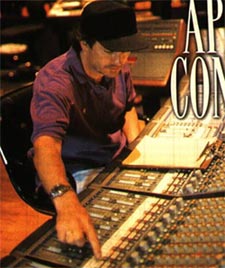
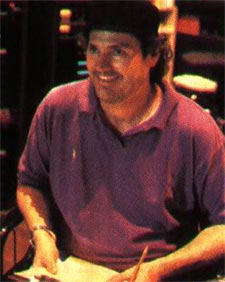
"I absolutely love it. This is it. We start work
right away." It was 4 a.m. when Mike Clink received a fateful phone call
in the fall of 1986. The excited voice on the
line belonged to Axl Rose, who had just heard a rough
mix of "Shadow of Your Love," a track Guns N' Roses had demoed with a producer
over the weekend.
For months prior to that weekend, the band had achieved
mediocre results with numerous other producers, including KISS' Paul Stanley.
Money and patience
were growing thin. "A lot of people came along that we
didn't like," says Slash. "And we scared off a lot of other producers.
Basically, everyone who worked
with us from the very beginning had a very distinctive
personality."
The band was initially attracted to Clink through his work
with UFO's Strangers in the Night. But his skill at capturing a twin-guitar
assault was only part of
equation that kept him behind the glass for the Guns'
essential disc. "They trusted me because I always told them how it was,"
he says. "That's the reason I stayed
in the camp for so long; my brutal honesty." In this rare
interview, Clink shares the brutal honesty involved in making Appetite
For Destruction.
Guitar One: The band had a reputation for being
difficult. Did you initially have reservations about working with them?
Mike: Absolutely not. I loved those guys. They
were characters from the first day I met them. I went to S.I.R. Studios
for rehearsal, and they were telling me
about themselves and asking me about some of the records
I had worked on, and they were spitting over one another's heads. It was
very strange to me, because
those guys were living on the street, and that was a whole
different mentality. But by the time the record was over, I understood
it completely.
Guitar One: So you would join in the fun.
Mike: Oh, absolutely. It was a lot of un to go
out with those guys. I couldn't do it every night, because I was making
the record. But on occasion, I definitely
went out. Those were some wild times.
Guitar One: How would you describe the sound they
were after?
Mike: They wanted I to be raw, and they enjoyed
the interplay of two guitarists, which is something that I've always loved.
They would also talk about the
records they liked, especially Axl. Axl came to the rehearsals
with cassettes--he listened to music constantly, and one of the bands he
loved was Metallica. And
Izzy was a Dixie Dregs guy. Slash was a Rolling Stones
guy. Duff was a Misfits-style punk guy. And Steven enjoyed all of the above.
Guitar One: How many songs did you have to work
with at the time?
Mike: A little over 20 tracks. After I became familiar
with the tunes, we wrote down what we felt would comprise the best record.
The one song that was a point
of disagreement was "November Rain." It was an epic, but
the rest of the band felt it wasn't right for the first Guns record--they
wanted to keep it guitar oriented.
Obviously, Axl felt it was his finest moment, and it was,
it's a great song. That was one of the tougher hurdles to get over on that
record.
Guitar One: What was the biggest obstacle once you
got into the studio?
Mike: The hardest part about recording Guns N'
Roses getting five guys to do the same thing at the same time. They were
extremely scattered, always wanting to
do a thousand things at once or nothing at all. So just
getting them in the studio and focused and playing was difficult. Another
thing I excelled at was knowing
when the band had peaked and when it was time to back
off. I innately knew when they had given their best performance.
Guitar One: On average, how many takes would you
need to get the basic tracks?
Mike: Some of them were quick, like five or six
takes. And some we played as many as 10 times. But we never beat it into
the ground. We were very well
rehearsed by then.
Guitar One: What would you shoot for on the basic
tracks?
Mike: I come from the school of live performance,
so I was going for as much as possible: drums, bass, and Izzy's guitar.
I didn't go for Slash's guitar, because
he just didn't have a tone at that time.
Guitar One: How did you capture the guitar sound?
Mike: I used two Shure SM57s, a Pultec EQ, and
the old-style dbx 160s for compression. Mostly it was just tweaking the
amps. I would run out constantly to
tweak the amps and move the mics around in the isolation
booths. Both Izzy's and Slash's amps were close miked. I got the effect
of the distance and
speciousness with a Ronald SRV2000 reverb. I had six of
them, and I used them for the guitars. That was a big part of the tone
on the record. We used chorusing
and Lexicon delay on some songs, and an octave divider
on one song.
Guitar One: So many albums from that era sound horribly
dated. How did you achieve such a timeless sound?
Mike: I try to make every band sound like themselves.
A trend in the '80s was for a band to use all of the producer's gear. I
wasn't afraid to use whatever was
right to make it work. I mean, Carvins were not my favorite
amp, but they worked for Izzy. When I finished that record, I was really
proud of it. The amazing
thing was, I had so many people come up to me and say,
"This is the biggest piece of crap I've ever heard." And after it sold
a million copies, those same people
said, "I always loved that record."
Guitar One: Did you have some sense at the time
that you were creating a classic album?
Mike: We knew that what we were doing was right.
It felt good the whole way through. I would put those rough mixes up, and
they just sounded amazing. I
don't think I knew it would become a classic. But [Geffen
A&R coordinator] Tom Zutaut came out to Take One Studios towards the
end of the sessions for a
playback, and he said, "Mike, what do you think this record
is going to sell?" I said, "This record is going to sell 2 million copies."
And I felt good about that. And
he said, "You're wrong. This is going to sell 5 million
records." We were both wrong [laughs].
Guitar One: Do you still get people coming to you
for that "Guns N' Roses sound"?
Mike: I always had that. Being the producer of
Guns N' Roses has been a blessing and a curse at the same time. Because
that album was bigger than life.
Everyone thinks that if I do a record with them, they're
going to sound like Guns N' Roses. And I go "Does your music sound like
Guns N' Roses? If not, you
really won't." It goes back to the fact that I try to
make every band to sound like themselves.
Guitar One: What is it about your approach that
allowed you to succeed with the band when so many had failed?
Mike: I can work around a problem. Usually when
people are insecure about themselves it's because they're afraid to make
a mistake. I make them feel
comfortable. And through my experience, I know shortcuts
to make things work more easily. And I like to have a good time. When it
gets to be a painstaking
job, then it's not fun for anybody. I want to be productive.
Mostly, it's understanding the insecurities of a drummer, a guitarist and
a singer. I get everybody feeling
like they can conquer the world.
An insider's guide to Axl Rose's perpetually postponed Chinese Democracy.
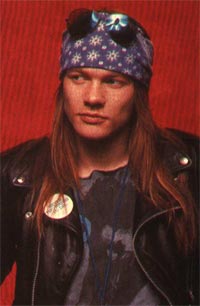
It took studio perfectionists Boston eight years to finish
Thirst Stage, and My Bloody Valentine have yet to follow up their 1991
sophomore effort, Loveless, but
by the time Guns N' Roses release their third album, Chinese
Democracy, Boston and MBV will probably have a quintuple-CD boxed sets
in stores. Rock
recluse Axl Rose has been working on this long-delayed
pet project for more then five fruitless years now with a cast of characters
that's included Dave Navarro,
Chris Vrenna of Nine Inch Nails, Billy Howerdel and Josh
Freese of A Perfect Circle, even Moby... but sadly, no original GN'R members.
The oft-rescheduled
Chinese Democracy, last slated for June 2001 release,
has become such a music industry joke that a more suitable title for it
might be Use Your Delusion.
Axl once advised that all we need is just a little patience,
but seriously... what the hell is taking so long? "That's the question
of the ages," shrugs Vrenna. "I have no
idea, because I've heard the album's been finished a couple
of different times." Rumor is it is actually completed.. with the minor
exception of the vocals, which Axl
allegedly still hasn't gotten around to recording. Which
makes sense, in light of other rumors that various GN'R incarnations have
rehearsed regularly for weeks
without hearing their benevolent dictator warble a single
note.
Presumably it's the lineup changes (possibly more than
Destiny's Child, the Red Hot Chili Peppers, and Menudo combined) that have
hindered Chinese
Democracy's completion. Vrenna is one of many past recruits
who "opted not to do the project, because there were other things I wanted
to pursue, and I could
tell it was going to be quite a lengthy commitment." A
Perfect Circle's Howerdel, who once served as Guns N' Roses' guitar tech
before joining the band, reached
the same conclusion: "I didn't plan on being there that
long. I said, 'This is just going to be for a month or two,' and it wound
up being two-and-a-half years. I
could have stayed there forever... I was there a little
longer then I wanted to be." And Moby, once tapped to helm the album's
recording before Marilyn Manson /
NIN producer Sean Beavan came on board, bailed out because,
as Vrenna puts it, "he had his best-selling record to date [Play] to go
create-worked out good
for him!"
This begs another "quest of the ages": Who exactly is in
Guns N' Roses these days? Well, as of this writing, there's a bassist Tommy
Stinson (whose former band
the Replacements, ironically can be heard mocking Axl
Rose on a 15-year-old live recording), Primus drummer Brain "Brain" Mantia,
keyboardist Dizzy Reed
(the sole holdover from any previous GN'R lineup) and
no less then three guitarists--Vrenna's ex-NIN crony Robin Finck, Axl's
childhood friend Paul Huge, and
avant-shared virtuoso Buckethead. However, this could
change several times before this article even runs. Gossip regarding Buckethead's
imminent departure
(due to his purported inability to spend more then five
minutes in the same room with Finck) persists, and Finck has already quit
and rejoined at least once. For a
while, an Internet rumor was even circulated that GN'R
founder Tracii Guns, who went on to form L.A. Guns, was re-recording all
of Buckethead's Chinese
Democracy guitar parts. But no one currently collaborated
with Axl will go on record; an industry insider who understandably wishes
to remain anonymous (we'll
call him "Mr. Brownstone") speculates, "I suspect they've
been sworn in blood never to discuss these things outside close doors."
The new Guns-for-hire may be obeying their Axl-imposed
gag order, but original members Slash and Duff McKagan are more forthcoming.
Says McKagan of
the new (but not necessarily improved) version of GN'R.
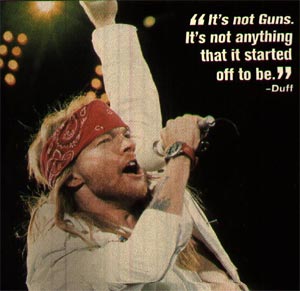
"It is not Guns. It's not anything that it started off to be... I could
give a shit who's playing. It has nothing
to do with me." As for whether the original Guns-men will
ever reunite, McKagan contemplates, "To go on and play... I guess it would
be for money alone. And I
never started playing music for money, so why would I
start now? Screw that."
When Axl came out of hiding to play January 2001's Rock
in Rio Festival--Guns N' Roses' first major concert in seven years--his
onstage comments regarding his
ex-bandmates were equally discouraging. "People worked
very hard--meaning my former friends--to do everything they could so I
could not be here today," he
announced, as infamously irate as ever "Fuck that. I am
as hurt and disappointed as you that, unlike Oasis, we could not find a
way to all just get along."
Mr. Brownstone optimistically claims "I bet that if Axl
could get around to doing a reunion, it would happen--Slash would do it."
(Lord knows if Izzy Stradlin', the
"quiet Gun," would sign up.) Slash himself is more ambivalent.
"I just wish [Axl] would get this Guns N' Roses record done so I can see
what this turmoil was all
about," the Top-Hatted One sighs. "What was the point?
Realistically you have a situation where it was all centered around one
person; you're going, 'What is it
you want to do so bad that you forced everybody out like
that?" I just want him to do what it is that makes him happy, because he
seems so frustrated."
Judging from Axl's desire to work with Moby and members
of the NIN camp--not to mention the techno-metal sludge of Guns N' Roses
rather disappointing
contribution to 1999 End Of Days soundtrack, "Oh My God"--what
makes Axl happy these days is electronic music, an artistic difference
that drove Slash to
leave GN'R. "I know one of the reasons that Chinese Democracy
has taken so long is the direction Axl choose to take--Slash wasn't into
it, and that was the end
of the band," explains Brownstone. However, no that KISS
/ Alice Cooper producer Bob Ezrin has reportedly signed on as Guns N' Roses'
new A&R rep, and
rock vet Roy Thomas Baker (Queen, Journey) has been brought
in to produce, it's possible that Chinese Democracy will be a blusier,
more Slash-friendly album.
"I can't imagine Roy Thomas Baker's making an industrial
record," chuckles Vrenna, "so I have to somehow believe it's going to have
a more classic sound to it."
One thing's certain: When Axl and Company played Rock in
Rio, they served up some classic, kick-ass rock 'n' roll. "It was probably
the single most impressive
musical moment I've ever seen," gushes Brownstone, who
witnessed the show from the stage wings, where Dave Grohl was seen "physically
spazzing out" over
the prospect of watching Axl perform. "They opened with
'Welcome to the Jungle' and it was nothing short of an absolute eruption."
Brownstone claims that two-hour-plus show proved that Rose
by any other lineup sounds just as sweet, saying the new Guns "all know
how to play those songs
flawlessly. Nobody else is Slash, of course but Buckethead
could play all those songs, and it was like being back in time." Vrenna
agrees: "You close your eyes,
and there's Appetite, man, note for note."
Axl's return to the spotlight also helped squelch some
growing urban legend regarding his appearance, as the 200,000 Rio concertgoers
were relived to see
basically the same wild Rose that performed at Rock in
Rio 1989. Okay, so maybe his beer gut was noticeably fuller, but at least
he still had a full head of hair and
heart full of attitude. "He looks the same--he looks like
a badass!" insists Brownstone. "He is the exact opposite of Fat Elvis."
Of course, this hasn't stopped the
Guns gossip mill: When GN'R cancelled their European tour
just a few months after their Rio triumph, the New York Post claimed the
real reason wasn't
Buckethead's reported internal hemorrhaging, but a botched
hair transplant operation that drove a scarred, balding Axl even deeper
into seclusion.
So it remains to be seen whether Axl will dust off that
kilt and umpire vest and go out tour again, or when (if?) Chinese Democracy
will ever be released. Yet
because Guns N' Roses vanished at a top of their game,
unlike their contemporaries--never working the nostalgia circuit, shooting
a "Behind the Music" special, or
recording CMC International--the public’s appetite for
Axl is still surprisingly voracious. Former Wall of Voodoo frontman Andy
Prieboy is the toast of
Hollywood with his satirical Axl musical, White Trash
Wins Lotto; Luna, Sheryl Crow, Coldplay, and Aluminum Group have all recorded
and / or performed
covers of "Sweet Child O'Mine" (a GN'R staple that the
Aluminum Group's John Navin declares "transcends irony, truly"; and Appetite
for Destruction continues
to sell roughly 5,000 copies a week with little or no
promotion. In fact, Guns N' Roses' legendary status as one of the most
electrifying hard rock bands of past 20
years is so firmly established, a full-scale comeback
attempt might only diminish their legacy. Maybe Axl ought to just live
and let die, already.
A very special thanks to Dejan, The Lost Rose webmaster, for this article!